Welcome

Hi everyone, welcome to my blog.
This blog is being written for my senior seminar English 495ESM Multigenre Literacy in a Global Context class. I am really looking forward to this class and assignment. I think technology has become a crucial part of our lives and it's wonderful to show that it can be used to make an impact and bring people together.

I love literature and I think technology allows people all around the globe to share their passion and reach an audience on a scale that would, at one point, have seemed impossible. This is a lesson I hope to teach my students when I become a high school teacher. Literature is not about writing a masterpiece, but expressing ones ideas and hopefully reaching someone in the process; with technology, doing that is easier than ever. Even Moodle and other such programs have made it easier for teachers to connect better with their students as well as Moodle forums allowing students to connect with other students. Through experience and with a little creativity, technology can be used to better connect with newer generation students and to teach them in a way that would actually fuel their passion for the subject.

Having never written a blog, this will be a nice way for me to be creative and share the lessons I learn this semester with others.
- Harjot K.

Sunday, May 11, 2014

Final Reflection

                                            Reflection

           Multigenre Literacy in a Global Context. Coming into class on the first day of the semester, I really didn’t know what the class title meant. I had some guesses but it wasn’t anything I really delved into, until the class was questioned by Professor Wexler as to what the meaning was. It was so interesting to hear all the various responses that people gave; all were very different and all were correct. We all have different ideas of what literacy is as well as what it means for something to be global. After having taken the class, I believe that multigenre is not only the various genres within literature, but also the different mediums used to teach literature. Literacy, I learned, is the varied components of literature, which ultimately means it is people’s ability read and write. The activities we did later, such as watching the documentary on China, as well as the movie Beijing Bicycle, really put into context and perspective the multigrenre literacy in a ‘global context.’ I am finally able to understand the title of the class, and understand what it means for education on a global scale.
            The class started with the Myth presentations. Although I had the textbook and had skimmed it for context, I still did not understand how the subject really fit in with the idea of being an English class. However, as the group and I started working on the project, it because evident why myths are crucial to literature as a whole. The myths are the foundation for a lot of ideas and concepts that are still visible in modern texts and films. The Norse myths have become popular in the Thor comic books, which have even become popular films now. The creation myths, which show the idea of multiple Gods, all representing different ideas such as Earth, wind, fire and water, can still be seen today. As I was reading about the creation myths for my assignments, I could find many parallels between some of those concepts and what I see in films and even some children’s shows such as Avatar: The Last Airbender and Dragon Ball Z. These myths tie in directly with the title of the class, showing just how global literature can be. The myths originated all around the globe, but can still be seen in the texts and medias of American society. Those stories have become timeless and transcend time and borders.

            The poetry section of the class seemed like it was the most difficult, although it was the one that was a lot of fun and the one that allowed the class to be really creative. The activity that required students to change the lyrics of a song they liked, really was a nice ice breaker activity and really allowed me to open up to the idea of writing my own poetry, that would be shared with the class. The music videos which were shown in class show how music and poetry incorporate multigenres and multimediums. There was a song presented that, although on the surface was about love, was actually a call for equality. These videos truly show the impact words can have when they are presented as a song, versus a poem, or versus a speech, etc. The medium in which words are presented as well as the ambiguity of the words can truly shape meaning. This is a great lesson on the meanings behind words, and it was useful when moving on to the poetry assignment. The analysis of the poem was very intriguing and really allowed the class to explicate and understand the true meaning behind, not only the words, but structure of the poem as well. Taking what we learned and applying it to our own poetry was very difficult, but interesting. Hearing other people read their poems was intriguing, because I tried to follow a strict rhyme scheme, meter and form; and a lot of other people wrote in free verse, and their poetry had a very unique charm. Poetry is a crucial part of literature’ not only being able to read it, but to understand it as well.

            Media literacy, is a very new but important part of literacy. Using different mediums is crucial in the modern classroom. The use of our blogs is the evidence of that. The blog is very interesting because it allows us students to do all our assignments but also make it more interactive and visually appealing, not only for the audience, but ourselves as well. All the requirements are fulfilled, but students are able to actually produce a portfolio of their work, which they enjoyed creating. This is crucial for subject matter students, to see how slight changes in traditional education can impact students and encourage them to enjoy doing their work. The integration of the blog, and videos can really help students stay engaged with the material. As seen in the presentations, the use of social media, apps and other mediums can be used to even further their understanding of the subject at hand. The use of such media also makes education a global issue. Students can work online and interact or access the work of other students; which is something they would never have been able to do before. My blog was viewed in Alaska and Canada, and it was really interesting to see that a person there may have been looking up something that I was writing about. The use of such medias really does connect people from all around the world.
            The world text analysis essay that was written was one that completely caught me off guard. We watched a Michael Moore documentary, followed by a documentary on China, and ended with Beijing Bicycle, a Chinese film. I had trouble connecting all three together and then all of them to the class. However, when I began to write my essay, I began to see a correlation between all the films, as well as the articles that were posted on Moodle. These films really are global texts and talk about issues such as capitalism, education and a lack of opportunities, that can be seen all around the globe. Although, the issues discussed in the films may not be the same, the underlying ideas are the same. Also, media, such as films do help in connecting the world. The students of the class could understand the everyday troubles of the Chinese people, simply by watching the film. We could also see just how significant the bicycle is to the Chinese people, because it is their livelihood and or way of maintain a status within their societies. The film allowed us to see a side of China that may have otherwise been not possible.

            ‘Multigenre Literacy in a Global Context’ is a very interesting class that started with history, and then looked at the future and ended with a view into another culture. The class gave a very varied view into literature and the world: past, present and future. The subjects covered in this class, as well as the knowledge they impart is very beneficial for future teachers. The lessons really teach people how to bring people together through education and media. These are ideas that can be adapted by students and these are lessons I hope to carry with me into the future, when I become an English teacher. 

Worlds Apart (Revised and Completed World Text Analysis Essay)

Worlds Apart
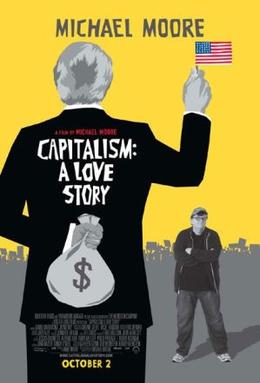
            Michael Moore’s documentary Capitalism: A Love Story sheds light into the flaws of capitalism in the United States. Moore draws attention to many people and organizations that take advantage of their employees and Americans as a whole. He also implies that there is a divide among the people of the United States, between the privileged one percent, who has everything but still wants more, and the common ninety-nine percent, just trying to
make ends meet on a daily basis. Moore shows the American people, who are being exploited, as well those who are financially profiting off the blood and sweat of others. These practices are not limited to the United States of America, with many countries around the world facing even more significant financial hardships. America goes through changes every time there is a political party change in the White House and Congress, but for many nations such as China, dictatorship changes have a lot more significance and influence on even the basic rights and needs of the people. According to Randy Martin's article, “Where Did the Future Go?,” “For the last twenty-five years those who might have been lulled by capital’s utopian chords have been subject to a rude awakening” (Martin 1). The film Beijing Bicycle really puts into perspective the everyday toils and troubles of people living in China; a nation which is socialist but often experiments with the ideas of capitalism and neoliberalism, bringing China into the global economic sector. Beijing Bicycle shows how a young man from a rural town has difficulty adjusting to life in the city. He tries to earn a living but constantly has to face obstacles of a city, where money and profit are the prime objectives. Beijing Bicycle not only shows the economic troubles of China and the negative influences these changes can have on its society, but offers an important juxtaposition between China and the United States, as well as the rich and poor in the city of Beijing.
            Guei is a young seventeen year old boy, who does not have
the job opportunities to learn a living in the countryside, where he is actually from. He, like many others, travels to the city in the hope of securing a job that would allow him to earn enough money to at least live life with the bare necessities. When he earns the job of a delivery boy, his main objective becomes saving enough money to be able to buy the bicycle given to him by the courier company to do his job. Guei’s boss even tells him and the other delivery boys that “these bikes are [their] livelihood.” Guei takes this idea to heart because he sees the truth in it; the bike would not only allow him to earn enough money to survive in the big city, but as suggested later, the bike also serves as a status symbol, a symbol of accomplishment. Although he is a young boy, who should still be in school studying, Guei takes to the streets and delivers letters and packages in the heat, without rest or hesitation. The bike delivery route is a tiresome and very meager job, especially by American standards, however, Guei is considered to be fortunate to have the job. Guei’s friend, Mantis, repeatedly tells him that the delivery job is a ‘great job,’ especially since he can “earn a bike in only one month.”
The story of Guei is similar to that of any people who go in the search of a better life. In Beijing Bicycle, Guei moves from the country to the city in the hopes of a more sustainable life. In Capitalism: A Love Story, Moore talks about people from impoverished countries who immigrate to the Unites States in the search of the ‘American Dream.’ However, like Guei, most immigrants learn that such dreams are not easy to achieve and can sometimes even be unobtainable. Although both nations appear to be vastly different, they both have an unequal distribution of wealth that allows some people to live a leisurely life while others appreciate even the most difficult of jobs because it is what keeps them off the streets one more day.
            The issues displayed in Beijing Bicycle are global issues. Nations from China to even the United States of America, struggle with offering its citizen the necessary tools to acquire an education, or the opportunities to acquire a job. As seen in China: A Century of Revolution, Chinese leader Mao did not bring prosperity into his nation. Many people became unemployed or lived in poverty while others prospered. After Mao’s death, there was hope for a better life when the regime changed, but that did not bring much prosperity either, even after trade was opened. Some people were able to get work in factories and live a better life. However, a majority of people, especially those in the country, did not see many changes in their lives; which is why people like Guei had to abandon their lives and move to the city. One of the main causes of discomfort for people is the “opposition between the country and the city,” (Jameson 48) but even parts of the city are very unlike each other. As Guei rides his bike around the city, there is a clear juxtaposition between the bike he is riding, that he can’t afford, and the hundreds of people driving around in cars. There is also a clear distinction between the people living in the slums and the people living in skyscrapers. Guei cannot afford to take a shower in a hotel, and has to be cleaned up, like the other delivery boys, just so they can be presentable to the clients. Guei does not even have his own toothbrush while, as Mantis claims, the rich can afford to change their clothes multiple times a day. These ideas are also apparent in the Michael Moore documentary where Moore discusses the layoffs that happened in many companies, especially automotive companies. According to David Harvey, in his book, A Brief History of Neoliberalism, the United States initially believed that to “ensure domestic peace and tranquillity, some sort of class compromise between capital and labour had to be constructed” (Havey 10). However, Moore argues that this compromise is no longer balanced and the labor class is being taken advantage of.  Moore talks about how many companies would lay off their workers and simply make the other employees work harder to compensate for the lack of workers. Many people would lose their livelihoods when they were laid off, while others would work excruciatingly hard, like Guei, with very little compensation. However, they, like Guei, did not have many other options so they continued to struggle. Although, China and the United States have different political stands, both nations are motivated by money. 
Inequality and unethical occurrences and practices also tended to create hostility among the people. According to Moore, in the United States, people would often become bitter and wronged at the fact that they were laid off or that companies were taking out life insurance policies on their employees and prospering off their deaths.  There becomes a clear divide between the people, which was seen recently in the United States in the ‘Occupy Wall Street’ and it was also visible in Beijing Bicycle. In Beijing Bicycle, the hostility is seen primarily through the characters of Mantis and Jian. Mantis has become so bitter that his hostility is no longer directed towards individuals, but all rich people. He constantly criticizes Qin and all people living in the structures around his shop, because he feels they have prospered while wrongs have been done towards him and people like him. Even Jian, who lives the equivalent of a middle class life, is bitter at his family primarily because they cannot give him the things that would give him a good social standing with his peers. These feelings of hostility and being wronged transcend borders and are global issues that can be seen all across the world.
Beijing Bicycle and Capitalism: A Love Story appear to very different films on the surface, but they share common themes that show just how similar the people, and the people’s lives, are in China and the United States.  The people in both nations struggle with the inequality that has been created between the rich and poor, as well as making ends meet. Moore is able to show how the people of America struggle and are wronged on a daily basis by Capitalism, while Beijing Bicycle focuses on how a boy tries to survive when society has set all the odds against it. The struggles and complaints seen in both films show an ongoing struggle that is a struggle seen all around the world.

Works Cited
Beijing Bicycle. Dir. Wang Xiaoshuai. Perf. Cui Lin, Li Bin, Zhou Xun, Gao Yuanyuan, and Li Shuang. Sony Pictures Classics,           2001. Film.
Capitalism: A Love Story. Dir. Michael Moore. Perf. Michael Moore. The Weinstein Company, 2009. Film.
China: A Century of Revolution. Dir. Sue Williams. Zeitgeist, 2002. Film.
Harvey, David. “A Brief History of Neoliberalism.” Oxford: Oxford UP, 2005. Print.
Jameson, Fredric. “The Politics of Utopia.” New Left Review 25 (2004): 35-54.
Martin, Randy. “Where Did the Future Go?” LogosOnline.com. 2006. Web.

Finding the One (Poem 02 Revision)

Note: This poem is written in four stanzas, each consisting of four lines. As compared to the other poem, it has more of a set rhyme scheme. It alternates between ABAB or rhyming couplets. This poem is loosely inspired by the Shakespearean sonnet style. 

Finding the One
Many people give up on love;
Others have it much more rough,
They never find that special one,
One whom they can call 'beloved.'

We often live lonely lives,
Because we don’t take risks in life.
If only we could share our feelings
Open up our souls and be revealing.

We might just see what life is about.
What it means to be truly alive.
We need to scream, we need to shout
We need to laugh, we need to let it out.

Loneliness can cloud our lives,
Making it difficult to feel alive.
We need to search for the joys in life,
Hopefully with a true love by our side.

A Dimmed Light (Poem 01 Revision)


Note: This poem is written in five stanzas, each stanza consisting of four lines. This poem does not really have a set scheme or style. Each of the stanzas are kind of on their own, whereas one may have an ABAC rhyme scheme, the other may have a rhyming couplet. My main concern was telling the story through the metaphor of light and through a little rhyme to help it flow.


A Dimmed Light
Looking back at the life I once lived
I have but one regret,
She was the light of my life
Like a star twinkling in the dark sky.

A light dimmed before its time,
Darkness now clouds my sky.
That light brought joy to life.
  She was my love, forever mine.

I should have held her more,
Given her the love she was desperate for.
She always knew she was the one,
The one who simply made my heart run.

I knew we were meant to be,
Sometimes fate doesn’t seem to agree.
She was the flame who filled the room,
Her warmth, I wish I still knew.
She lit up my world like none before.
A glimmer of hope for this lost soul.
I wish I could tell her again
She was my love, she was my soul.


Fighting for Life (Revision of Poetry Analysis Essay)


Fighting for Life

Poetry is given life by the poet, and meaning by the poet. The poet often uses poetry as an escape from reality, or a way of purging of his or her emotions. However, once a poem is written, it belongs to the world and can be a very influential and emotional part of a reader’s life. Poetry is a way for the author and the reader to get in touch with his or her emotions, as well as his or her thoughts. This rings true in the case of Dylan Thomas, whose poem “Do Not Go Gentle into that Good Night,” really allows him to delve into his speaker’s inability to cope with his emotions, at the declining health of his aging father. The speaker struggles with his love for his father, his hopelessness in the situation, and the idea of death. In the poem, Thomas uses a literary devices such as a set rhyme scheme but he also relies on metaphors, repetition, and parallelism to portray the speaker’s emotions and to give the reader richer insight and understanding. Above all, “Do Not Go Gentle into that Good Night” is highly reliant on the speaker’s tone, which goes from being powerful at the beginning, to more feeble as the poem progresses and as the speaker slowly becomes more and more disdainful of the situation. Thomas’s theme of love and loss along with his use of literary devices such as metaphors, repetition and speaker’s tone are all crucial in helping a reader gain a closer understanding of the speaker’s situation and emotional state of mind.
Dylan Thomas’ speaker is struggling with the reality of death and is unable to face the fact that his father is dying. The speaker urges his father to “rage, rage against the dying of the light,” (l 3) encouraging him to take action and fight for his life. The author displays the speaker’s sense of urgency and desperation through a constant repetition of this line, who is hoping that the rage would bring life to his father. Rage, according to the speaker, is essential to fighting the night and darkness, which Thomas uses throughout the poem as metaphors for death. The father cannot simply allow the light to die, he has to stand up to save it, or he will forever be covered with darkness. The speaker then tries to make a stronger argument and gives examples of how “good men,” (l 7) “wild men,” (l 10) and “grave men” (l 13) who “at their end know dark is right” (l 4) and that death is near, “do not go gentle into that good night” (l 1) because they are strong and wise, just as the father should be. The speaker is beginning to appear desperate, one who will use any method to convince his father that life is not worth giving up without a fight; if his father has any strength left, he would use every ounce of it to fight for his life.
Thomas depicts emotion through the speaker of his poem, but also uses other literary devices throughout the poem. Thomas is “a poet who uses pattern and metaphor in order to create a complex craftsmanship in order to show” (Daiches 350) the various meanings and layers of poetry. The title exclaims, “Do not go gentle into that good night,” because it is clearly a metaphor for death. The night is synonymous with the sunset, which is in literature a metaphor for the end of a day or life. By using night to represent death, Thomas is able to counter night with light, which therefore represents light. Thomas’ speaker uses the metaphor metaphor of light to tell his father that, “old age should burn and rave at close of day,” (l 2) implying that a person, at his end, should ‘burn’ with life instead of just fizzling out of existence. Light and dark is a constant metaphor throughout the poem, which Thomas continues with the paradox of a “blinding sight” (l 13) which still allows “blind eyes” (l 14) to see at the end of their life. The speaker believes that “blind eyes could blaze like meteors and be gay” (l 14) because they can be luminous, even when the light in their eyes is dimming. The metaphors are a clever device by Thomas to allow his speaker to talk about death indirectly, because it is clearly something that he has difficulty discussing and confronting.
Repetition is a crucial part of the poem with Thomas emphasizing select line such as “Do Not Go Gentle into that Good Night” and “Rage, rage against the dying of the light.” These two lines are repeated four times each, making up almost one half of the poem. They are the definitive message that the speaker is trying to get across to his father whereas the author uses them as the underlying theme of the entire poem. The repetition also helps change the tone of the speaker’s voice as the poem progresses. At the beginning of the poem, the speaker has a powerful voice and is demanding his father to fight against the night. However, as the speaker continually repeats these lines, his tone changes and it begins to appear as though he is pleading to his father. The tone changes from being one of authority to one of desperation, as the speaker repeatedly begs his father to fight for his life, because he does not want his father to die. Not only does the repetition change the tone, but it also pulls at the emotions of the reader, as the reader can clearly see that the speaker is struggling with his own feelings. Thomas “has a tendency …to see things from different, unusual perspectives” (Greenway 275) which allows the reader to “identify with the speaker in a specific poem” (Greenway 275). The repetition continues, as the word ‘men’ is repeated throughout the poem, in the hopes it would inspire the father to stand up and fight. The speaker gives his father examples of different men from those who are good, to those who are wild, because to the speaker, escaping death or facing it vigilantly, is a sign of manliness. Therefore, through repetition of the word man, the speaker hopes to inspire his father to act like a man; one who is not weak, even when facing death.
Dylan Thomas is effectively able to show the love a man has
for his father. Although the relationship between the father and son is not clearly defined, it is evident that the son truly cares for his father and fears losing him. The speaker articulately details his emotions in his request for his father to “not go gentle into that good night” (l 1). Although there is no resolution to the poem, the author is able to exude the feeling of the speaker through different literary devices. It is easy to sympathize with the speaker, especially as his tone becomes more distressed through the progression of the poem. Dylan Thomas’ diction, along with his use of metaphors and repetition, allow him to show strong emotion and anguish in his poem “Do Not Go Gentle into that Good Night.” The reader goes along on the journey of emotions, can feel the struggle of the speaker and truly hopes that the father will display the rage, which the speaker so longs for.

Works Cited 

Daices, David. “The Poetry of Dylan Thomas.” The English Journal 43.7. (1954): 349-356. Print.

Greenway, William. “Dylan Thomas and ‘The Flesh's Vision’.” College Literature 16.3. (1989): 274-280. Print.

Thomas, Dylan. “Do Not Go Gentle into that Good Night.” Poets: Dylan Thomas.  Poets.org.1997. Web.

Monday, May 5, 2014

Worlds Apart

           Michael Moore’s documentary Capitalism: A Love Story sheds light into the flaws of capitalism in the United States. He draws attention to many people and organizations that take advantage of their employees and Americans as a whole. He also implies that there is a divide among the people of the United States, between the privileged one percent and common ninety-nine percent just trying to make ends meet on a daily basis. He sheds light on the people being exploited as well those who are financially profiting off the blood and sweat of others. These practices are not limited to the United States of America, with many countries around the world facing even more financial hardships. The film Beijing Bicycle really puts into perspective the everyday toils and troubles of people living in China; a nation which is socialist but often experiments with the ideas of capitalism and neoliberalism. Beijing Bicycle shows how a young man from a rural time has difficulty adjusting to life in the city. He tries to earn a living but constantly has to face obstacles of a city, where money and profit are the prime objectives. Beijing Bicycle not only shows the economic troubles of China and the negative influences they can have on it its society, but offers an important juxtaposition between China and the United States, as well as the rich and poor in the city of Beijing.

            Guei is a young seventeen year old boy, who does not have the job opportunities to learn a living in the countryside, where he is actually from. He, like many others, travels to the city in the hope of securing a job that would allow him to earn enough money to at least live life with the bare necessities. When he earns the job of a delivery boy, his main objective becomes saving enough money to be able to buy the bicycle given to him by the courier company to do his job. Guei’s boss even tells him and the other delivery boys that “these bikes are [their] livelihood.” Guei takes this idea to heart because it is the truth; the bike would not only allow him to earn enough money to survive in the big city, but as suggested later, the bike also serves as a status symbol. Although he is a young boy, who should still be in school studying, Guei takes to the streets and delivers letters and packages in the heat, without rest or hesitation. The bike delivery route is a tiresome and very meager job, especially by American standards, however, Guei is considered to be fortunate to have the job. Guei’s friend, Mantis, repeatedly tells him that the delivery job is a ‘great job,’ especially since he can “earn a bike in only one month.” The story of Guei is similar to that of any people who go in the search of a better life. In Beijing Bicycle, Guei moves from the country to the city in the hopes of a more sustainable life. In Capitalism: A Love Story, Moore talks about people from impoverished countries who immigrate to the Unites States in the search of the ‘American Dream.’ However, like Guei, most immigrants learn that such dreams are not easy to achieve and can sometimes even be unobtainable. Although both nations appear to be vastly different, they both have an unequal distribution of wealth that allows some people to live a leisurely life while others appreciate even the most difficult of jobs because it is what keeps them off the streets one more day.

Friday, April 18, 2014

Capitalism...

On Wednesday, we watched Capitalism: A Love Story starring and directed by Michael Moore in class. The movie really puts a lot of things into perspective. Clearly, with any film, there are going to be exaggerations or manipulation of facts, however, there are some arguments that Moore makes that shed light
on the profit centric society we live in. Capitalism is a large part of society and as stated in the film, it influences the mentality and actions of a lot of American citizens. As Moore demonstrates, instead of the youth of the nation being reformed, they were being imprisoned for profit. Also, companies are profiting from the deaths of loyal employees. This speaks volumes of our society on a global scale. American still has the potential to be the land of dreams, however there are many people that are manipulating the nation for their benefit. As David Harvey states in "A Brief History of Neoliberalism," ""for any way of thought to become dominant, a conceptual apparatus has to be advanced that appeals to our institutions and instincts, to our values and our desires, as well as to the possibilities inherent in the social world we inhabit" (Harvey 5). For our society, according to Moore, that conceptual apparatus is capitalism; it has people acting a certain way that allows the rich to get richer, because those of middle or lower class believe in the American dream and hope to be rich one day. People keep acting the same, even though they personally are not benefiting in any way, because they have hope for a better future. However, Moore questions whether that future is based in reality or simply a mirage.

Sunday, March 30, 2014

Media Literacy

The media literacy projects that were presented by the other groups this week were amazing. I really enjoyed doing our presentation, because each member of the group got to be creative and try different recipes and learn to use a social media site in a way we have not done before. 

However, the works the other groups did was very impressive and enlightening. I learned a lot of new things. I have used Google docs but mostly with friends, when we review each other's assignments; it just makes it easier to leave notes. However, I have never used it for a group project and don't know why. The group presentation really encouraged me to start using it for class; not only will it allow everyone to work, but it will ensure that one person does not have sole responsibility for bringing to class or for putting the finishing touches on it. 

The app that one of the groups presented was also intriguing. It would be nice if that app was available on the Android market, that way everyone would be able to work on the project on the go. However, it is nice that at least it is available on the web, so anyone can participate.


I use a lot of apps for organization, but very few for actually working with groups. My favorite app is called Wunderlist. It allows people to make lists and set due dates. However, it does have a group project option, where users can have a to-do list for group members who can all be invited and then check off jobs that are done or add new ones. This is a feature I have never used, but it would be great for group projects so each person can be assigned a different task. That person will always know what their task is so they won't forget to do it, and there will be no confusion as to who has to do what.

Media Literacy is a great topic to discuss in class. It will encourage students to share ideas which can be useful to others or inspire students to find easier ways to work with other. The presentations of the other group members have taught me a lot. I hope to be able to use some of the options they showed us, with future group projects.

Thursday, March 20, 2014

Cookie Monster and Media Literacy

Visual literacy has become very popular in the last few years, as well as the idea of education being multi-modal. It is important for us students to understand how much influence and impact media projects can have on our potential students, and the best way to understand is to try it ourselves.

Click 'My Project' in post.
Next week, we are presenting our Media Literacy projects. I was initially very intimidated by it, because I wasn't really sure how it would turn out. However, after working with my awesome group, I feel very confident about our project and actually love the ideas we have been able to come up with. We started with a really simple concept and then it just snowballed into a big project. Initially we weren't sure how we would talk or teach a lesson for half an hour; now half an hour does not seem like enough time. We all have our own little projects but we are going to make sure to tie them into one another so the presentation flows smoothly.

I started my portion of the presentation and it's coming along well. I tried to make it a little interesting and fun, because as teachers we cannot just lecture students and expect them to enjoy it, or even learn from it. I am really enjoying working on this project, because it is interesting and a bit of a challenge. Although, my project is on Facebook, (My Project) I have to ensure that it does not lack in substance. PowerPoint has become the safe choice for all presentations in classrooms, even though there are so many other services and options available. Our group would like to show how the world is changing, and we have to learn to adapt to it, to better reach our students.

Friday, March 14, 2014

Horror Movies


As we discussed in class on Monday: media, art, and literature can be realistic or a bit more abstract. As we were talking, it dawned on me that a lot of horror movies try to make people feel as if they are a part of the action, instead of just being an observer. Horror films make people forget that they are watching a movie because the films can be frightening or simply have people in anticipation. As the video above for the first Paranormal Activity film shows, people were jumping in their seats because they were so caught up in the story and scares of the film. I somewhat enjoy horror films because they are interesting but often I get extremely scared. I did go to see this film in theaters and although my reactions were not as extreme, I did forget that I was watching a movie and felt scared for myself and the characters. This idea of making the audience feel a part of the film is most prominent in horror films than any other genre. It is aided with the shaky cam and other techniques which try to make the films seem more realistic. The use of such tricks could be seen in earlier films such as The Blair Witch Project and then in Cloverfield. There is also a genre of films known as "Found Footage," which tries to show that the clips being seen on screen are real discovered footage from real events. This helps even more so to make the audience feel that they are watching something real as opposed to watching a film. There are many "Found Footage" films, and a list can be found at: Found Footage Films. The list of numerous films, within the last decade, shows how prevalent this idea is becoming and that more people are looking for films that will not only scare them, but make them forget they are watching a movie and put them right in the action. 

Wednesday, March 12, 2014

Vanya & Sonia & Masha & Spike...

A couple of weeks ago, I had an opportunity to go see Vanya and Sonia and Masha and Spike, directed by David Hyde Pierce, at the Mark Taper Forum in downtown Los Angeles. The show is very funny and the performances are excellent. This is the first high production and most professional play I have ever seen so it was just an overall wonderful experience. The interesting thing about the show that the ending of the play shows an outburst of the lead
characters, Vanya, as he becomes frustrated with technology. In the play, Vanya puts on a play but is consistently interrupted by Spike, who keeps texting or playing on his phone. This leads to an outburst by Vanya, who then delivers a powerful monologue about the problems with technology. Technology is great and has brought a lot of people together, as well as made our day to day tasks and lives either. However, there are still people out there who are so plugged in all the time that they tune out reality, which is a mistake. It is always wise, if not polite, to be aware of ones sorrounding to know what is right or wrong. I think this play ties in really well with English 495ESM. Although many people have negative perceptions of technology and media, this class is showing as well as teaching how technology can be useful in learning and teaching. People can learn many ways to use technology to better their lives and that of others. It is just important that people learn how to use the tools at their disposal, and use them properly, instead of just as a distraction or a way of killing time.

Thursday, February 20, 2014

Cheese can inspire poetry...

For this weekly reflection, I remembered an incident from when I was writing my poetry for class. My friend likes sending me random messages and one said something along the lines of "I love cheese bagels." Then we started discussing school and I mentioned that I had to write two poems for my English class. He jokingly asked if my poem was about cheese, and being cheeky, I responded with:
Oh melted cheese upon that bagel.
Your gooey goodness upon that table.
Please don't go, we're meant to be.
Oh cheese bagel, don't go cold on me.
I think I was more confused with my response than my friend was. However, writing that so-called poem really helped me write my two other poems for various reasons. The first was that it really got me into the rhyme scheme mindset. As foolish as this poem is, it still has two rhyming couplets. The poem even has repetition and alliteration. Even the idea of a cold bagel being a metaphor for death is present in the poem. But I didn't think about any of this when I messaged it over to my friend, why would I? I wasn't until I started writing this post that I truly noticed these things. However, subconsciously, I think writing this poem as a joke really was influential in my ability to use some of these literary devices when writing my actual poetry shortly after. I did use a lot of these devices in at least one, if not both, poems. This really took me back to the first day of class when Professor Wexler said that you can somehow relate anything back to the subject being taught in this class. I would never have thought that a silly text to my friend would help me write poems that I would stand up and share in front of my entire class. It was a fun and interesting experience and I can't wait to move onto the group work now.

Saturday, February 15, 2014

Finding the One (Poem 02)

Note: This poem is written in four stanzas, each consisting of four lines. As compared to the other poem, it has more of a set rhyme scheme. It alternates between ABAB or rhyming couplets. This poem is loosely inspired by the Shakespearean sonnet style. 

Finding the One
Many people give up on love
Others have it much more rough.
They never find that special one,
One whom they can give all their love.

We often live lonely lives,
Because we don’t take risks in life.
If only we could share our feelings
Open up our souls and be revealing.

We might just see what life is about.
What it means to be truly alive.
We need to scream, we need to shout
We need to laugh, we need to cry.

Loneliness can cloud our lives,
Making it difficult to feel alive.
We need to search for the joys in life,
Hopefully with a true love by our side.

Wednesday, February 12, 2014

A Dimmed Light (Poem 01)


Note: This poem is written in five stanzas, each stanza consisting of four lines. This poem does not really have a set scheme or style. Each of the stanzas are kind of on their own, whereas one may have an ABAC rhyme scheme, the other may have a rhyming couplet. My main concern was telling the story through the metaphor of light and through a little rhyme to help it flow.


A Dimmed Light
Looking back at the life I once lived
I have but one regret,
She was the light of my life
Like a twinkling star in the dark sky.

A light dimmed before it’s time,
Darkness now clouds my sky.
That light brought joy to life.
  She was my love, forever mine.

I should have held her more,
Given her the love she was desperate for.
She always knew she was the one,
The one who could make my heart run.

I knew we were meant to be,
Sometimes fate doesn’t seem to agree.
She was the flame who filled the room,
Her warmth, I wish I still knew.
 
She lit up my world like none before.
A glimmer of hope for this lost soul.
I wish I could tell her again
She was my love, she was my soul.